Friday, June 3, 2011

Thursday, June 2, 2011
Isabel of the Whales by Hester Velmans

This is a story that will keep students on the edge of their seats. Velmans does a great job with suspense and for shadowing. Her work is high quality. She does a great job of using sensory details and descriptive verbs. She also shows her readers thing instead of telling them, always a sign of a good writer. She does an excellent job making her work of fiction logical and organized. It not only brings up life questions about what it means to take care of the world around us but gives detailed information about whales. Her story telling manner of delivery information will help make the facts more memorable and meaningful. She does not use statistics to discuss the decline in whales over the recent years but has students experience it through her words. She also shows students the beauty of being a whale and what might a whale’s life be like.
I would use this book in my classroom as a read aloud or free read. Either way it would be a great book. I recommend it for the upper grades because of the discussion possibilities but no doubt most of the younger grades would enjoy the mystical tale as well. I recommend this book to teachers.
Publishing: 2005
Hello Ocean written by Pam Munzo Ryan and Illustrated by Mark Astrella

I loved this book. It was well written and its illustrations were breathtaking. The picture continues on the front to the back of the cover as well as the story began before the publishing.
Munzo does a brilliant job with her descriptions in a poetic and informative way. She also uses great descriptions. It also uses words that mean the same as the meaning. She does a great job using detailed verbs.
The illustrations however make the story. They are so life like. I would love to read more books illustrated by Astrella. He does an amazing job. He uses shadows and sunlight to bring his illustrations to life. Each one is rich with details and illusionistic texture. The pictures are so real one might actually think they’re there.
This would be a great book for a read aloud as well as a free read. This book would be a good choice to read if they ever went on a beach trip or had a class discussion about the sea shore. I recommended this book to teachers.
Publishing: 2001
Migration of a Whale written by Tanya Kant and Illustrated by Mark Bergin

The text was more informational than focus minded. It also broke up the text into little paragraphs and had individual words for diagrams to help with the descriptions. Breaking up the text makes the book easier to read and more engaging. Every two pages or so is a new topic so it doesn’t matter if you read the book in order.
The illustrations are very basic and hardly change from page to page. There is no background illustrated but only cookie cutter-appearing whales. There were no little details or exciting coloring to cause the reader to want to read more. I found the illustrations very boring for that reason. In the end I did not care for the pictures.
I feel like the text is good but the illustrations bring it down. For that reason I feel that I could find a better illustration informational picture book for my classroom. I would not recommend this book.
Publishing:2008
Dolphins written by Sharon Bokoske and Margret Davidson and Illustrated by Courtney
I found this book very informative and its pictures engaging. I felt that it made learning fun with its little anecdotal stories and interesting facts.This is definitely an informational book. There is not one consistent story throughout the entire book. It does give short stories about dolphins. It tells some fascinating tales of how they heroically save and work beside people. The illustrations are also very detailed and realistic. They add to the story as well as give specific details about the text.
I would use this book for a text set or a paired book. I would not use it as a read aloud. It would be a great book to have as a free read in a library.
Published: 1993
Special note Courtney’s last name is not mentioned.
A Listair and Kips Great Adventure! Written and illustrated by John Segal

I found this book entertained and enjoyable. I felt that this book might be one in a serious of picture books. It used a common theme of cats and dogs. The illustrations were simplistic and yet formatted in a fun way. The illustrations are formatted at times like a graphic novel and most definitely paint the story. The illustrations tell the story almost more than the words.
The text is simplistic and yet informative and is written as a graphic novel might with a sentence or two per illustration. It also at times uses words that sound like what they might mean like “boom” and “crack.” The story definitely has moments of suspense and action and will draw readers in.
I would use this book as a free read in my library. I would not use it as a read aloud as it does not have very many moments for dramatic action. This book could be for younger ages as well as old. However the illustrations may be due to style aimed for younger ages.
Publishing: 2008
Story of Dolphin by Katherine Orr
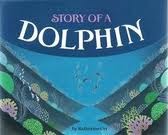
The illustrations were much more simplistic than some of the illustrations that I have seen before. It had a very distinct style of print that some people may not prefer but I found enjoyable. Orr definitely utilized a variety of colors that goes perfectly with the mood.
The text has many details that help paint a picture. This book does have a lot of word competed to other picture books. There might be several paragraphs on page. That is why I recommend it for older students.
I would use this as a free read. I would not use it as a read aloud because of the amount of words. I might however use it with a text set.
Published: 1993
Dolphins on the Sand written and illustrated by Jim Arnosky

The illustrations add to the story. They help explain some of the more challenging vocabulary as well as add to the story line. The illustrations are also just beautiful using warm and cool colors at times. The beautiful illustrations add to the imaginations and the tranquility of nature.
Arnosky also utilized suspense and adventure. The story did a great a job of showing readers not telling them. It also brings up several discussions of how whales and dolphins get beached and what people do to help. One of the best aspects of this story is that it is true for the most part. Although at times written from the dolphins perspective it is an account of a real event that the author witnessed.
I would have this book as a free read. I might also use this book as a read aloud.
This book can also be used as a text. I recommend this book to teachers.
Published: 2008
Big Blue Whale written by Nicola Davies and illustrated by Nick Maland

It is important to note that once again the illustration continues from the front cover to the back of the cover. The story also begins before the publishing information. The illustrations did not only have their own unique pencil sketch styles with color but also were very scientific looking at times. It used several closes ups so one might better understand what the text discusses. It also adds to the text creating at moments its own side story.
The text is very informative and not belittling. It helps make the reader the expert assuming they understand and that they can understand the vocabulary for themselves. Therefore its not condescending what so ever. However, one of the most unique things about the text is its formatting. The text appears in paragraph form at times as well as wrapping itself around the illustrations and the characters. This makes reading the facts fun and interesting. I definitely learned a lot from this book. One cool fact is that even though it is a picture book it has an index at the end.
I would use this book in my classroom. I could use the activity we used in class with the three different responses. I could also use it in a text set…which I plan on doing. I could use this book for science projects and research. I recommend this book to teacher.
Published: 1997
Billy Twitters and his Blue Whale Problem written by Mac Barnett and Illustrated by Adam Rex

I absolutely love this book. I knew I was in a treat when the picture on the cover continued on to the back. I also got excited with all of the cool black and white images. The story began before the publishing information and then had black and white images at the end. I absolutely loved the story line and found the book very engaging.
The illustrations were exquisite. Each character was unique and the backgrounds were filled with details. They most definitely added to the story. Every once and awhile there would be a page or two where there would only be illustrations before the text began again. You could read the book without the text and it would still be a story. The illustrations were also educational. When the text discussed the sixe of the whale then the whale was drawn with a car and a man beside it so that it could be compared in size. Later on in the book the illustration also compares the whale to a pool, these images will help students really grasp how big a blue whale actually is. This is especially helpful for visual learners although everyone will gain something.
Barette kept the story the focus however he riddles the text with interesting facts and details. Text is displayed as in most picture books paragraph form. It is also displayed in thought bubbles. This adds to the story making it more enjoyable for the reader and allows the student to really get into the character. The text and illustrations work so well together you might thing that the author and illustrator were the same person.
I would use this book as a free read or to be read aloud. It lends itself to some drama and as an information book. It also is very student friendly. I think students who may not enjoy reading will enjoy this book. I will use it in a text set about whales and could be used as a comparison book. I recommend this book to teachers.
Published: 2009
Walter and the Tugboat written by Eugene Bradley Coco and Illustrated by Edward Heck
I found the book incredibly simplistic and basic. The book was designed for preschoolers as it says on its cover but I found the sentence structure almost too simplistic. I did not find the illustrations very detailed or informative.
The illustrations did not add to the text nor did they distract. They did show the emotions of the characters through eyes and used different color themes. I felt that the simplicity of the illustrations however distracted from the actual text. Sense the preschoolers cannot even read the illustrations should be able to tell the story without the words. The illustrations do that to an extent but some of the text is needed for meaning.
The text can be condescending. A very, very little child may not think so but according to chapter 3 from our reading in class if I feel that the tone is condescending so might they. This does not make reading enjoyable but a chore that must be done.
I might use this book if a child really struggled with reading, but I do not recommend it. I don’t think I would have it in my classroom.
Published:1988
Hattie and the Wild Waves author and illustrator Barbara Cooney

I found this book refreshing and sophisticated. I think most children will be able to gain something out of the sweet little story. I enjoyed its classical word choice and world view.
The text was incredibly well written, using expansive vocabulary and vivid details. Not only did Cooney use well chosen details to paint pictures with her words but also descriptive verbs, the key to writing with success like “murmur” and “transfixed.” Her choice of words challenges the reader, giving them confidence as they go along. She also does a very nice job of showing her readers not telling them what she means.
I found the elaborate and colorful illustrations insightful. Although they utilized later artistic techniques with shapes and colors the picture displayed a century now left in history. The architecture and clothing was exactly what one might expect in the late 1800s or early 1900s. They also are very detailed allowing the reader to look at them multiple times and still catch something new.
I think this book would be great for students doing a text set on the late 1800s or early 1900s. It would give students an inside look at the culture of that time period. Also the story is what I expect from that culture and what little Hatttie goes through. It is a great discussion book. Why were there so many rules of what she could and couldn’t do? Why did they think she meant painting houses not art work? There are many issues that a teacher could choose for a class discussion. I would want to read this book as a class or in a small group. I recommend this book.
Published: 1990
Sunday, May 29, 2011
Nathaniel Fludd Beastologist: Flight of the Phoenix by R. L. Lafevers and Illustrated by Kelly Murphy

Although the fast paced adventure will be loved by students I found the book’s quality somewhat lacking. Lafevers does not use much descriptive language or many sensory details. As with other novel writers she does not paint pictures with her words. Lafevers does a good job of drawing readers into her story she does not do a good job of using descriptive language to totally make her world of beastologist believable. Although Lowery does a great job of making her world logical and thinking through all the details to make it realistic where Lafevers’s story is too rushed to create a complete world.
I would allow this book on my shelf as a free read but only for third and forth graders. The language and literary skills are too simplistic for upper grades. I would not read this book aloud as I do not find this novel as well written as others.
Published: 2009
Dory Sory by Jerry Pallotta and Illustrated by David Biedrzycki
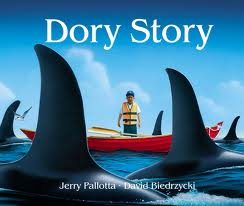
I enjoyed this story. At first I thought that it might be too flat and dry but as the story progressed I became hooked. In just a few short pages Pallotta captures his readers through suspense and descriptive detail. I also found the illustrations to be fascinating as some looked as if they really were a picture and not a drawing.
Pallotta uses descriptive words that sound like what they mean such as “splash.” He also grips his readers with the added suspense on whether the protagonist will make it out alive. He not only utilizes great literary skills but also teaches about the food chain. Any students who read this book will be gripped with the excitement of the first person narrative, almost imagining that they are there as well.
The illustrations add to the story as well. They add to the tension with the muted colors and contrasting red. Biedrzycki also seems to master the underwater world of fish not only capturing what is happening in the book but allowing readers several glances to take it all in.
I might use this book as a read aloud. It would definitely entice children. I think that although most ages would appreciate this book it is geared for the younger ages. I might use this book for an introduction on a unit about the ocean or the food chain. It might also be a good book to discuss the word suspense and first person. I recommend this book.
It is also important to note a the publishing information is at the back of the book so that the story starts on the first page.
Published: 2000
Octopus Oyster Hermit Crab Snail A poem of the Sea written and illustrated by Sara Anderson

I enjoyed this book, although I was not in love with it. I found the illustration nice and quaint and it was a fun book to read. I would never read it as a read aloud but I would have it on my shelf. The entire book is a poem and Anderson
I would use this book as a free read in my room. I would also recommend in to students if we are doing a poetry unit. I would not choose it as a read aloud since I think I can find some better poetry literature out their but it is always an option.
Published: 2005
Underwater Counting by Jerry Pallotta and Illustrated by David Bierdrzycki

I absolutely love this book. I usually am not a big fan of counting books but this book is not your typical counting book.
I knew I was in for a treat because the cover continued its picture onto the back of the book. The author’s and illustrator’s name is written in a wave shape on the covers along with the title. The illustrations were beautiful. The flashy colors made the underwater life truly come alive. Bierdrzycki also made his fish look realistic enough that one might just do a Mary Poppins and reach into the picture and touch them. Yet, he also still has an almost mystical appearance that would entice readers on a fascinating journey through the sea counting fish. He has the fish appear as if you might see them at sea. They are not in neat little rows like some counting books but sometimes only a part of a fish will appear or some might be draped in shadow the further into the deep ocean the reader ventures.
The illustrations are not the only exciting thing about this book but so is the text. The text is not a typical counting book. Pallotta uses comedy as it goes through counting the fish. He also gives insightful scientific facts when on each page about the fish. The counting almost becomes secondary in the excitement of all of the different kinds of fish being discussed and what is unique about each. However, Pallotta does not tell his readers his facts but shows them. He does a very good job of making the reader feel like the expert and not using any condescending tones. Sometimes “counting books” after the age four can seem too simple and babying. They uses phrases like “can you count all the fish?” or “lets count the fish, 1,2…” Pallotta does not. He uses phrases like “These eight sailfish are a type of billfish.” This book does not only teach students how to count but will teach students about fish and the sea. It will also expand their imaginations as they view Bierdrzycki’s illustrations.
I would use this book with any age student. Although it is a counting book the illustrations and text would be engaging and enjoyable. This book also will help children learn not only how to count to ten but all the way to fifty. This would be a great book for parents to read to their children and for students as a read aloud let alone in their library. I recommend this book to all teachers.
Published: 2001
Saturday, May 28, 2011
It’s A Secret written and illustrated by John Burningham

I found this book rather boring. I did not find the illustrations elaborate or incredibly detailed. They were simplistic in form and did not add any new insights to the story. I did not enjoy this book.
Although Burnningham distinctly chooses several distinct colors to use throughout the story, the illustration’s styles looked as if they were drawn with pencil and marker or crayons. The text had a specific pattern and rhyme as many children’s books do. It takes readers on an imaginary journey to where cats go at night but the tale is bland with any sensory or imagery details. The tone at times nears that of condescending. Although Burningham is a well know author I did not much care for this book and do not recommend it to other teachers. I feel in comparison to several others the masterful picture books I have read over the course of the weeks that there are more insightful and equipped books out there.
Published: 2009
Art & Max written and illustrated by David Wiesner

I did not mean to get another Wiesner book. I was in the library flipping through books and was captured by this one’s elaborate illustrations. I took it home. It was not wordless so I didn’t think to check and see if it was Wiesner. I guess it goes to show why he won the Caldecotte Medal three times, (only the second person in history to do that). This book is not only a fantastic story about a little lizard attempting to paint but teaches students through showing (not telling) how to paint. He takes painting to its very basic elements of line, shape and color. As Max attempts to fix Arthur he learns how to point. Students will not only be craving to read this book over and over again but they will gain basic knowledge in painting.
Wiesner uses detailed illustrations that tell his story. The masterful details make each read have new insight into the characters, places and story. He uses a variety of colors to get his comical story across. The words add to the story but very few of them are needed to understand the story. His illustrations almost do the job for themselves as seen in Flotsam and Tuesday. Wiesner is highly capable of doing this.
I would recommend this book to all teachers. I think this is a must have for art teachers. I would use this book when discussing art in class. I also would have it in my classroom as a read aloud. Like all of Wienser’s books this is a great read for all ages.
Published: 2010
The Red Book by written and Illustrated by Barba Lehman

I found this book to be a lot of fun. I enjoyed the idea of a magical book and adventurous journey using balloons to fly. This is another wordless book that I found entertaining and enjoyable.
The qualities of the illustrations themselves did not compare to the elaborate illustrations of David Wiesner, but they did have their own flair. They were simple in shape but did have detailed images of space and location. There were also moments where they read more like a graphic novel with several pictures stacked up on each other. She uses complementary colors and line to shape her images. The character’s emotions were neatly conveyed on the characters faces without words. Allowing the reader to be the expert and discover what was happening.
I might have this book in my library. I would not choose it to have it read aloud due to the fact of its simple illustrations. It is a great book for students interacting in the reading process for the first time. Therefore I recommend this book for younger grades. Although Wiesner’s masterful illustrations would be enjoyable and fascinating even for the upper grades Lehman’s does not. Published: 2004
The Misfits by James Howe

The writing dialogue was somewhat unrealistic in my mind. I did not think Howe did a very good job with showing his readers and not telling his readers. Nor did his descriptions seem well crafted. Although I was not impressed with the quality of text the message is golden. Also students of all ages seem to truly enjoy this book.
I would use this book if bullying or name calling became and issue…which there always seems to be some. I would do a unit on perspective and thinking of why we bully. I would do this with older students who are accustom to reading chapter books. It would be very powerful for those in the same grades as Addie and Bobby. There are two picture books although the names escape me that discuss gossip and putdowns. One is for boys and the other is for girls. I think I would read aloud both of those book while we were reading this one. I also had a friend in my Drama in the Classroom who created a lesson plan for the last chapter of the book. In it she has the students read Bobby’s script. Highlighting certain parts where the students read in unison and in another color the ones where student read or another. She reads all the other parts. I would most definitely incorporate this into what ever lesson I chose to do with his lesson.
Published: 2001
Subscribe to:
Posts (Atom)